A Korean Lens on Regenerative Hospitality Part I
Hospitality Beyond the Hocance: From Consumption to Restoration
A night at a glamorous five-star hotel in the city can feel like the perfect escape. We enjoy beautiful food, sink into plush bedding, and call it a hocance—the Korean term for a hotel staycation. And yet, even after a luxurious stay, there are times when we return home still carrying a quiet sense of fatigue.
Perhaps this is because rest today is often intertwined with consumption. We move through carefully designed interiors, restaurants, amenities, views, and curated moments. The experience may be rich and memorable, but it does not always leave us feeling truly restored.
This is where a new chapter of hospitality begins—not through greater spectacle, but through a deeper understanding of restoration.
From Wellness to Regeneration
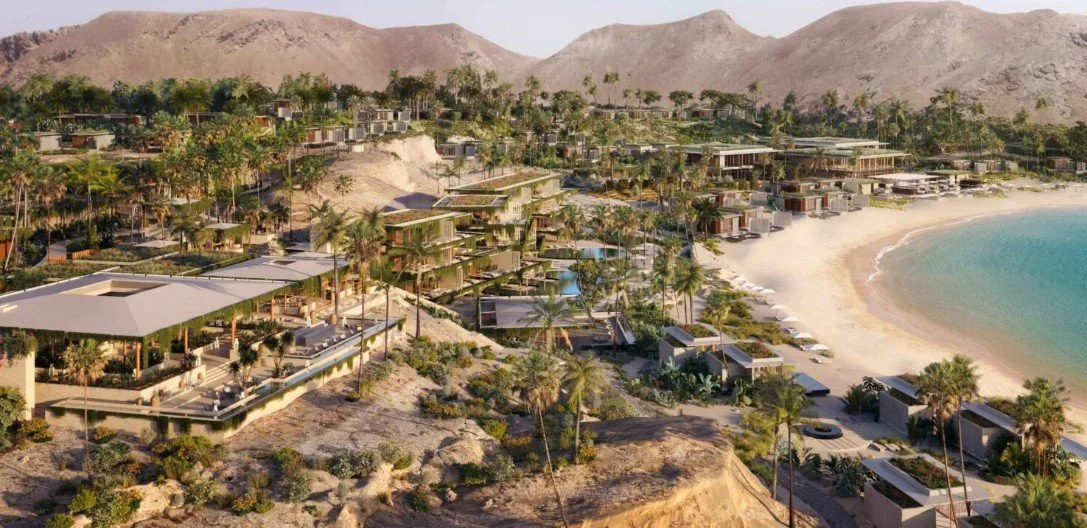
Over the past few years, while working on international hospitality projects, I have witnessed a meaningful shift in the global wellness conversation. This became especially clear through my involvement in two Six Senses projects in Saudi Arabia, as well as the Jayasom wellness resort project in Amaala.
(Image credit & copyrights @ Jayasom)
Six Senses, one of the most influential references in high-end wellness hospitality, has long expanded beyond the idea of wellness as a spa-led offering. Its approach integrates sleep, sustainability, emotional wellbeing, local ecology, and the understanding that human healing is closely connected to the health of the natural environment.
As a design consultant, I led the Jayasom wellness resort’s Branded Residences sector from concept design and spatial strategy through to the construction phase. In that project, wellness was approached not as a visual theme, but as the restoration of relationships—with oneself, with family, with nature, and ultimately with life itself.
The design language therefore had to interpret something deeply intangible: the release of fixed roles, the reconnection to one’s inner self, and the arrival at a quieter form of wisdom. In this context, space was not simply a backdrop. It became a vessel for transformation.
The New Luxury Is Not Display
This shift is no longer a niche movement; it has become the top agenda across the global hospitality industry. At the recent 'Sleeper Sessions' in Bali—a global symposium gathering hotel developers, designers, and investors worldwide—the most heated topics of discussion were 'Longevity' and 'Regeneration.' Global leaders, including Six Senses CEO Neil Jacobs, made it clear that wellness and longevity are now the "New Luxury."
Luxury is moving away from narrow definitions based on visual impact, material expense, or the size of a swimming pool. Instead, a more meaningful question is driving the industry: How does this place restore the guest, regenerate local culture, and contribute to the surrounding ecosystem?
Destinations such as Desa Potato Head in Bali illustrate this beautifully. Through zero-waste initiatives, cultural programming, and a contemporary reinterpretation of local traditions like jamu herbal medicine, hospitality becomes more than mere accommodation. It becomes a living ecosystem—one that connects guests to place, culture, and a different rhythm of living.
In this context, high-end hospitality is no longer only about escape. It is also about return—returning guests to themselves physically, mentally, culturally, and spiritually.
That, to me, is the essence of regenerative hospitality.
Isolation Alone Is Not Enough
Modern life is defined by constant connection, stimulation, and exposure. To recover deeply, many people need spaces that allow them to step away from daily routines, digital noise, and habitual forms of consumption. They need places where nature, silence, and the self can be encountered with greater focus.
And yet, physical isolation alone does not always create meaningful restoration.
Beautiful architecture and carefully selected materials can shape a powerful atmosphere, but what often gives a retreat emotional depth is narrative.
Narrative is not simply a marketing statement added at the end of a project. It is the guiding logic that can shape decisions from the earliest concept stage to the final operational details.
Hospitality development involves a long sequence of decisions. What should be protected when budgets tighten? What can be simplified during value engineering? Which elements are essential to the guest experience, and which are less central?
When a project is grounded in a strong narrative, it can move through these moments of change without losing its core identity. Lighting, circulation, materiality, scent, sound, rituals, uniforms, and even the way guests are welcomed can all be aligned by the same underlying story.
Without narrative, a hotel may still be visually appealing.
With narrative, it becomes a world.
Beyond Style: Rethinking Concept
I once had a hotel stakeholder ask me, “What concept should we choose? Should it feel romantic, or more modern?” Rather than focusing on style alone, the conversation led us toward something more grounded: the identity of the place itself.
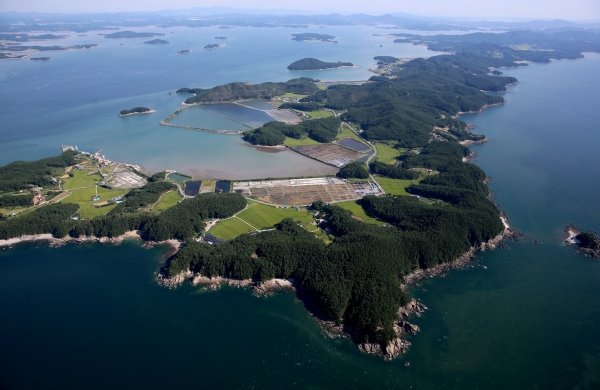
The site was near Taean, one of Korea’s most beautiful coastal regions, known for its preserved shoreline, beaches, islands, rock formations, sea cliffs, and Taeanhaean National Park. The wider landscape already carried a powerful natural narrative—tidal rhythms, west coast sunsets, coastal forests, fishing villages, wind, salt, and the quiet horizontality of the sea.
Image credit @ 충천뉴스
And yet, the actual site sat within a commercial district. That contrast opened up a more layered design consideration: how might a hotel in a commercial setting respond to the vast natural identity around it? How could the guest be gently drawn away from visual noise and reconnected to the coastal rhythm of Taean? How might the project become a threshold between everyday commerce and preserved nature?
What began as a conversation about whether the concept should feel “romantic” or “modern” gradually became a broader reflection on what a concept can be. These terms may describe an aesthetic direction, but hospitality concepts often become more meaningful when they grow from something more grounded: the land, the guest’s emotional needs, the cultural context, and the operational experience a property hopes to offer.
For a site like Taean, this opens up more place-responsive questions. What does this landscape invite the guest to feel? What kind of rest belongs here? How can design mediate between a commercial district and the preserved nature nearby? Should the hotel feel like an urban convenience point, a coastal threshold, or a quiet retreat from visual consumption? And what should remain with the guest after departure—the style of the interiors, or the feeling of having touched the rhythm of the sea?
This is why meaningful wellness does not begin with style alone. It begins with the story of the place.
Toward a More Meaningful Korean Hospitality
To me, hospitality design becomes more meaningful when it begins with questions deeper than style or aesthetics.
It can begin with questions such as:
What story does this land hold?
What kind of restoration can happen here?
What might the guest release, recover, or rediscover?
How might this place restore not only the guest, but also the region, the culture, and the ecology around it?
Korea already holds extraordinary landscapes, cultural depth, and longstanding rituals of care.
What seems increasingly important now is the discipline to translate these qualities into hospitality experiences with narrative, structure, and emotional intelligence.
The next meaningful Korean retreat may not come from applying a global wellness formula onto Korean soil. It may emerge instead from translating global standards through Korean landscapes, Korean culture, and Korean ways of caring for the body and mind.
True luxury is no longer only about how much a space can offer.
It is about how deeply it can return us to ourselves.