A Korean Lens on Regenerative Hospitality Part II
Toward a Korean Wellness Retreat
In my previous note, we looked into how the global hospitality paradigm is shifting away from superficial luxury toward 'Regenerative Hospitality'—where the ultimate goal is the deep restoration of the guest and the local ecosystem. However, to bring this vision to life in Korea, we cannot simply import Western wellness models or copy the tropical retreats of Bali. We must translate this global standard through a Korean lens.
The blueprint for world-class wellness already exists within our heritage. The ingredients for profound restoration are deeply woven into our history, waiting to be rediscovered. The true task of a hospitality designer today is not to invent a new wellness trend, but to unearth these authentic narratives and thoroughly choreograph them for the modern traveler.
That journey begins with finding the right stage—a place capable of offering the ultimate luxury of our time: perfect, undisturbed isolation.
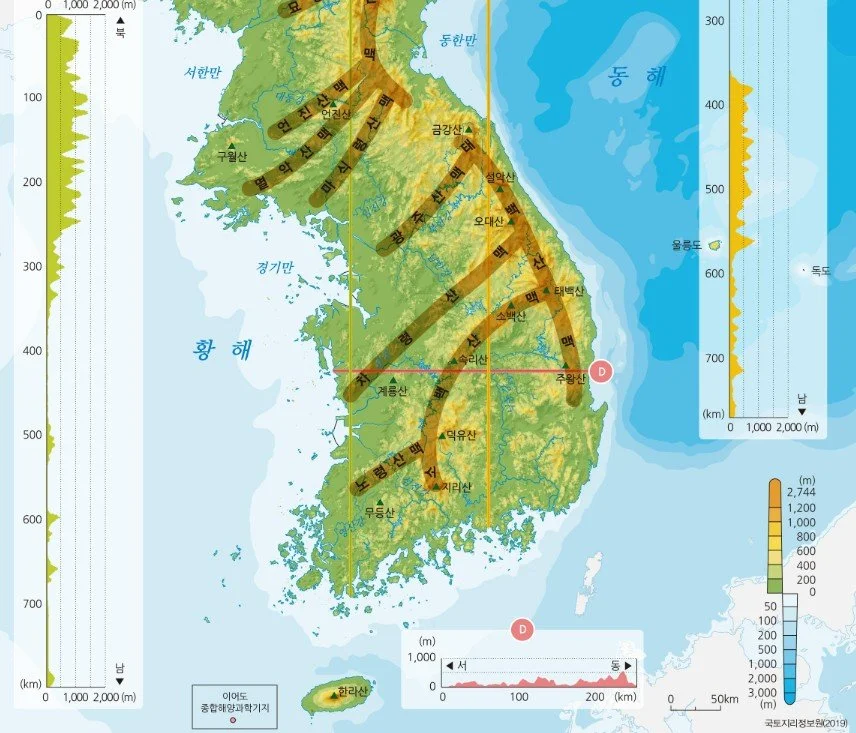
Korea as a Mountain Country
Korea is a mountainous country. Mountains are not rare here. They surround our cities, shape our seasons, hold many of our temples, and create valleys, forests, streams, and paths that are already deeply connected to rest and retreat.
Yet when we think of a highly refined mountain retreat experience, the images that often come to mind are not always Korean. We may think of a Japanese ryokan, an onsen village, a Balinese wellness resort, or a remote European spa destination.
(Image Credit @ 대한민국국가지도집)
These references are valuable, but they also make me wonder what a Korean mountain retreat could feel like if it came more directly from our own landscape, materials, rituals, and culture of care.
Korean mountains have a particular atmosphere. Their beauty is often quiet rather than dramatic. Pine forests, granite rocks, narrow valleys, cold streams, morning fog, temple paths, dry leaves, mineral earth, and the smell of wood or soil all create a sense of calm that does not need much decoration.
This kind of landscape does not necessarily ask for a spectacular resort. It may ask for a more restrained hospitality experience that helps guests slow down and become aware of their body again.
In that sense, the value of a Korean mountain retreat may come less from abundance and more from subtraction: less noise, less visual stimulation, less performance, and less consumption; more silence, more slowness, more contact with natural materials, and more awareness of the surrounding landscape.
Accessible Isolation
A Korean mountain retreat also does not need to be extremely remote. This feels especially relevant in Korea, where many beautiful mountain areas are within one or two hours of major cities.
The opportunity may not be total geographical isolation, but psychological separation. A guest may leave Seoul after lunch and arrive before evening, but once they cross the boundary of the retreat, the rhythm should clearly change. The city should begin to fall away not only visually, but physically, sensorially, and mentally.
This transition cannot be left to the scenery alone. It needs to be designed.
Arrival as a Designed Transition
In an ordinary hotel, arrival is often administrative. Guests check in, receive a key, and move to their rooms. In a retreat, arrival can do more than that. It can help the guest leave behind the phone, the speed of the city, the tension in the body, and the habit of constant stimulation.
This is where spatial rituals become important.
Upon arrival, guests might remove their city shoes and change into breathable woven hemp slippers. Shoes made for pavement and speed are replaced by a material that belongs to slowness and ground. This simple act can immediately change how the body moves.
Scent can become another threshold. A quiet ritual using dried pine needles or local forest herbs could create an olfactory signal that the guest has entered a different environment. Scent reaches the body before language does, and it can help the guest feel that the city has been left behind.
Water can also become part of the arrival sequence. Guests might wash their hands in a raw stone basin with cold mountain water, then dry them with unbleached Sochang cloth. The act itself is simple, but it can mark the transition from the outside world into a more quiet and intentional space.
Sound can support the same transition. A single strike of a Korean brass bowl, yugi, could invite guests to listen until the vibration fades into silence. In a retreat, silence should not feel empty. It should feel designed and intentional.
Taste can complete the arrival. Instead of a sweet welcome drink or a decorative cocktail, guests could receive something warm and clear, such as pine nut broth or a seasonal root tea. The first taste of the retreat does not need to stimulate. It can simply help the body settle.
Digital Surrender and Clothing
One of the most difficult parts of contemporary rest is digital separation. Asking guests to put away their phones can easily feel restrictive, but if the process is designed carefully, it can feel generous.
For example, guests could wrap their phones in naturally dyed bojagi before placing them in a wooden lockbox. The phone is not taken away; it is wrapped and put to rest. This small difference changes the meaning of disconnection. It becomes a gesture of care rather than a rule.
Clothing can also become part of the transition. City clothes carry the posture of work, productivity, and social performance. Changing into natural loungewear can help the guest enter a softer physical state.
The fabric should breathe, the color should come from nature, and the cut should allow the body to relax. In this sense, changing clothes is not only about comfort. It is part of entering a different rhythm.
What Fills the Retreat
Once this sense of isolation is created, the next question is what should fill the retreat experience.
This is where Korea does not need to borrow too much from elsewhere. We already have traditions that are closely connected to restoration.
Temple food offers a philosophy of restraint, seasonality, and care. It is not simply vegetarian cuisine. It asks what the body needs in order to soften, cleanse, and recover.
Temple stays offer another model through early morning silence, chanting, meditation, simple meals, and slow walking. These experiences are not designed to impress. They are designed to quiet the self.
Natural dyeing and traditional fabrics can add another layer. Indigo, persimmon, gardenia, acorn, chestnut shell, and charcoal create colors that artificial pigments cannot imitate. Hemp brings the body into contact with natural texture, while Sochang carries an emotional language of humility, purity, and care.
These elements should not be used as decorative Korean motifs. They can be understood as tools that support the guest’s physical and emotional restoration.
A Quieter Language of Korean Wellness
Imagine arriving from the city into a quiet mountain retreat. You remove your shoes, change into woven hemp slippers, wash your hands in cold mountain water, hear the fading sound of yugi, drink something warm, wrap your phone in naturally dyed bojagi, and change into soft natural loungewear.
Later, you eat temple-inspired food made with local ingredients and sleep on breathable bedding in a room that smells faintly of pine.
This experience does not need to feel dramatic or overly designed. It does not need to perform wellness. It can simply help the guest return gradually to the senses.
For me, this is where a Korean mountain retreat becomes interesting. Korea has many mountains, but we have not yet fully translated the emotional and sensory power of those landscapes into contemporary hospitality.
The opportunity may not be to invent something entirely new, or to copy a ryokan, a Balinese retreat, or a Western spa model. It may be to look again at what already exists here and translate it with more care.
A Korean retreat language can come from our mountains, our materials, our food, our rituals, and our quiet ways of caring for the body. It does not have to be grand or overly symbolic. It only needs to feel rooted, restrained, and genuinely connected to place.
A Korean Lens on Regenerative Hospitality Part I
Hospitality Beyond the Hocance: From Consumption to Restoration
A night at a glamorous five-star hotel in the city can feel like the perfect escape. We enjoy beautiful food, sink into plush bedding, and call it a hocance—the Korean term for a hotel staycation. And yet, even after a luxurious stay, there are times when we return home still carrying a quiet sense of fatigue.
Perhaps this is because rest today is often intertwined with consumption. We move through carefully designed interiors, restaurants, amenities, views, and curated moments. The experience may be rich and memorable, but it does not always leave us feeling truly restored.
This is where a new chapter of hospitality begins—not through greater spectacle, but through a deeper understanding of restoration.
From Wellness to Regeneration
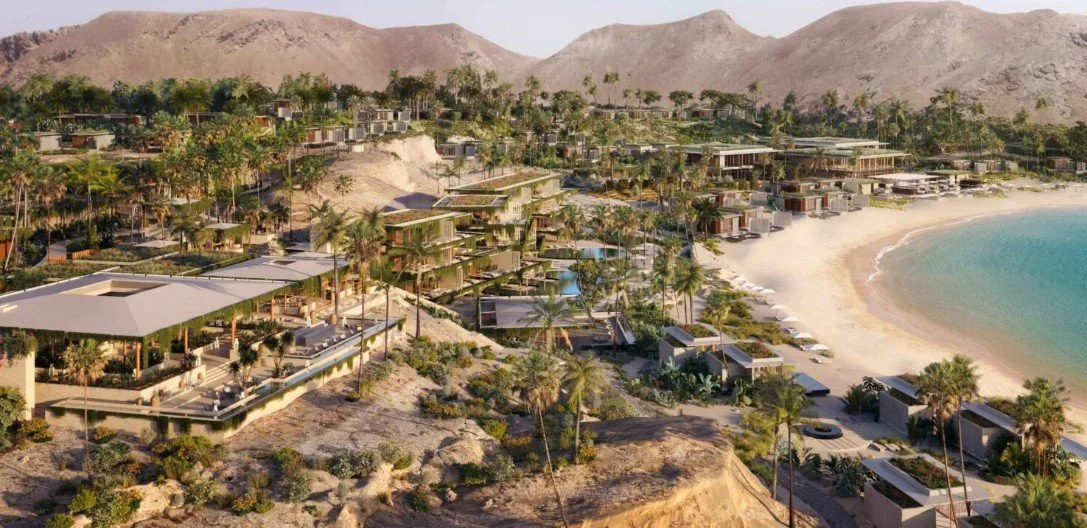
Over the past few years, while working on international hospitality projects, I have witnessed a meaningful shift in the global wellness conversation. This became especially clear through my involvement in two Six Senses projects in Saudi Arabia, as well as the Jayasom wellness resort project in Amaala.
(Image credit & copyrights @ Jayasom)
Six Senses, one of the most influential references in high-end wellness hospitality, has long expanded beyond the idea of wellness as a spa-led offering. Its approach integrates sleep, sustainability, emotional wellbeing, local ecology, and the understanding that human healing is closely connected to the health of the natural environment.
As a design consultant, I led the Jayasom wellness resort’s Branded Residences sector from concept design and spatial strategy through to the construction phase. In that project, wellness was approached not as a visual theme, but as the restoration of relationships—with oneself, with family, with nature, and ultimately with life itself.
The design language therefore had to interpret something deeply intangible: the release of fixed roles, the reconnection to one’s inner self, and the arrival at a quieter form of wisdom. In this context, space was not simply a backdrop. It became a vessel for transformation.
The New Luxury Is Not Display
This shift is no longer a niche movement; it has become the top agenda across the global hospitality industry. At the recent 'Sleeper Sessions' in Bali—a global symposium gathering hotel developers, designers, and investors worldwide—the most heated topics of discussion were 'Longevity' and 'Regeneration.' Global leaders, including Six Senses CEO Neil Jacobs, made it clear that wellness and longevity are now the "New Luxury."
Luxury is moving away from narrow definitions based on visual impact, material expense, or the size of a swimming pool. Instead, a more meaningful question is driving the industry: How does this place restore the guest, regenerate local culture, and contribute to the surrounding ecosystem?
Destinations such as Desa Potato Head in Bali illustrate this beautifully. Through zero-waste initiatives, cultural programming, and a contemporary reinterpretation of local traditions like jamu herbal medicine, hospitality becomes more than mere accommodation. It becomes a living ecosystem—one that connects guests to place, culture, and a different rhythm of living.
In this context, high-end hospitality is no longer only about escape. It is also about return—returning guests to themselves physically, mentally, culturally, and spiritually.
That, to me, is the essence of regenerative hospitality.
Isolation Alone Is Not Enough
Modern life is defined by constant connection, stimulation, and exposure. To recover deeply, many people need spaces that allow them to step away from daily routines, digital noise, and habitual forms of consumption. They need places where nature, silence, and the self can be encountered with greater focus.
And yet, physical isolation alone does not always create meaningful restoration.
Beautiful architecture and carefully selected materials can shape a powerful atmosphere, but what often gives a retreat emotional depth is narrative.
Narrative is not simply a marketing statement added at the end of a project. It is the guiding logic that can shape decisions from the earliest concept stage to the final operational details.
Hospitality development involves a long sequence of decisions. What should be protected when budgets tighten? What can be simplified during value engineering? Which elements are essential to the guest experience, and which are less central?
When a project is grounded in a strong narrative, it can move through these moments of change without losing its core identity. Lighting, circulation, materiality, scent, sound, rituals, uniforms, and even the way guests are welcomed can all be aligned by the same underlying story.
Without narrative, a hotel may still be visually appealing.
With narrative, it becomes a world.
Beyond Style: Rethinking Concept
I once had a hotel stakeholder ask me, “What concept should we choose? Should it feel romantic, or more modern?” Rather than focusing on style alone, the conversation led us toward something more grounded: the identity of the place itself.
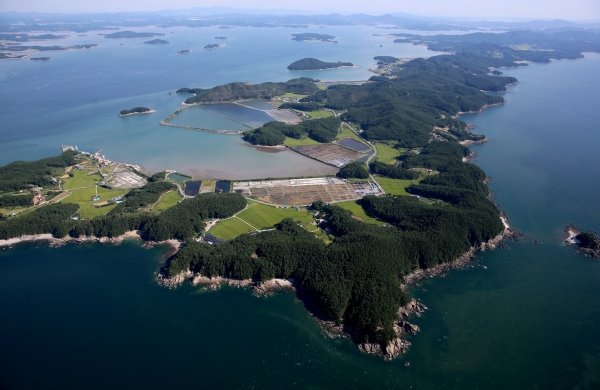
The site was near Taean, one of Korea’s most beautiful coastal regions, known for its preserved shoreline, beaches, islands, rock formations, sea cliffs, and Taeanhaean National Park. The wider landscape already carried a powerful natural narrative—tidal rhythms, west coast sunsets, coastal forests, fishing villages, wind, salt, and the quiet horizontality of the sea.
Image credit @ 충천뉴스
And yet, the actual site sat within a commercial district. That contrast opened up a more layered design consideration: how might a hotel in a commercial setting respond to the vast natural identity around it? How could the guest be gently drawn away from visual noise and reconnected to the coastal rhythm of Taean? How might the project become a threshold between everyday commerce and preserved nature?
What began as a conversation about whether the concept should feel “romantic” or “modern” gradually became a broader reflection on what a concept can be. These terms may describe an aesthetic direction, but hospitality concepts often become more meaningful when they grow from something more grounded: the land, the guest’s emotional needs, the cultural context, and the operational experience a property hopes to offer.
For a site like Taean, this opens up more place-responsive questions. What does this landscape invite the guest to feel? What kind of rest belongs here? How can design mediate between a commercial district and the preserved nature nearby? Should the hotel feel like an urban convenience point, a coastal threshold, or a quiet retreat from visual consumption? And what should remain with the guest after departure—the style of the interiors, or the feeling of having touched the rhythm of the sea?
This is why meaningful wellness does not begin with style alone. It begins with the story of the place.
Toward a More Meaningful Korean Hospitality
To me, hospitality design becomes more meaningful when it begins with questions deeper than style or aesthetics.
It can begin with questions such as:
What story does this land hold?
What kind of restoration can happen here?
What might the guest release, recover, or rediscover?
How might this place restore not only the guest, but also the region, the culture, and the ecology around it?
Korea already holds extraordinary landscapes, cultural depth, and longstanding rituals of care.
What seems increasingly important now is the discipline to translate these qualities into hospitality experiences with narrative, structure, and emotional intelligence.
The next meaningful Korean retreat may not come from applying a global wellness formula onto Korean soil. It may emerge instead from translating global standards through Korean landscapes, Korean culture, and Korean ways of caring for the body and mind.
True luxury is no longer only about how much a space can offer.
It is about how deeply it can return us to ourselves.